
GQ GMC-300S Digital Nuclear Radiation Detector Monitor Meter Geiger Counter Radiation Dosimeter
4.6Editor score
Real-time Data Logging
Rechargeable Battery
PC Software Support
This guide compares the top nuclear radiation detectors for personal safety, home use, and professional monitoring to help you choose the right geiger counter
Choosing a reliable nuclear radiation detector is essential for anyone concerned about environmental safety or personal protection. These devices measure ionizing radiation levels and provide immediate alerts when thresholds are exceeded.
We evaluated ten leading models based on sensor accuracy, display clarity, battery life, and additional features like data logging. Each product offers unique benefits for different use cases ranging from casual monitoring to professional inspection.
Each pick highlights key strengths and limitations to help you find the best fit for your needs. Please note that product availability and pricing may change over time so check current listings before purchasing.
4.6Editor score

4.6Editor score

4.5Editor score
The following table provides a side-by-side comparison of all ten selected nuclear radiation detectors to help you quickly identify the model that best suits your specific monitoring requirements.




The HFS-50-CsI Nuclear Radiation Detector stands out as a top-tier choice for users seeking high accuracy and reliability. With a rating of 4.6 stars this model features a CsI scintillator sensor that offers superior stability compared to traditional Geiger-Müller tubes.
We may earn a commission when you buy through this link, at no additional cost to you.
Its color screen provides intuitive data viewing with dynamic waveform curves and dose rate indicators. The device supports multiple measurement modes including dose rate total dose and average dose rate ensuring comprehensive monitoring capabilities.
While the price is higher than entry-level models the extended battery life and durable design justify the investment. The inclusion of a telescopic rod also enhances safety by allowing users to measure radiation sources from a distance.
This detector is ideal for professionals lab technicians and serious hobbyists who need dependable data. Its combination of precision portability and advanced features makes it the best overall choice for radiation monitoring in 2026.
The CsI scintillator sensor ensures minimal interference and stable readings even in challenging environments.
With up to 1700 hours of continuous measurement the device remains reliable for long-term monitoring tasks.
We may earn a commission when you buy through this link, at no additional cost to you.
The GQ GMC-300S offers excellent value for those seeking a reliable nuclear radiation detector without a high cost. Its 4.6-star rating reflects user satisfaction with its core functionality and ease of use.
We may earn a commission when you buy through this link, at no additional cost to you.
This model features real-time data logging every second into internal memory allowing users to track radiation levels over time. The included PC software makes it easy to download and analyze historical data for better insights.
Although it lacks the advanced sensors of premium units it performs well for general home and environmental monitoring. The rechargeable battery ensures you do not need to constantly replace power sources during extended use.
Budget-conscious buyers will appreciate this device balance of performance and price. It is a practical choice for casual users who need accurate readings and basic data tracking capabilities.
Users can access essential radiation detection features at a fraction of the cost of professional-grade devices.
The internal memory and PC software enable detailed analysis of radiation trends over days or weeks.
We may earn a commission when you buy through this link, at no additional cost to you.
The Radar-9989 Geiger Counter is designed for professionals and enthusiasts who demand the highest level of precision. Equipped with a U.S. made LND7311 sensor it detects Alpha Beta Gamma and X-ray radiation with exceptional accuracy.
We may earn a commission when you buy through this link, at no additional cost to you.
Its large 3.5-inch color LCD screen displays multiple metrics simultaneously making it easy to interpret complex data. The device supports six different units including CPS CPM μSv/h and μR/h to meet various international standards.
While the price is significant the included telescopic rod and storage box add value for field use. The visible alarm system ensures you are alerted instantly when radiation levels exceed safe thresholds.
This model is perfect for industrial safety and laboratory settings where reliability is critical. Its robust features and premium build quality make it the top choice for serious radiation monitoring needs.
The LND7311 mica window sensor provides higher sensitivity and a wider energy response range than standard Geiger tubes.
Support for six different radiation units allows users to work with diverse data formats and standards easily.
We may earn a commission when you buy through this link, at no additional cost to you.
The FNIRSI GC-01 Geiger Counter offers a practical solution for detecting gamma beta and X-rays in various environments. With a rating of 4.2 stars it provides solid performance for everyday monitoring tasks.
We may earn a commission when you buy through this link, at no additional cost to you.
Its built-in GM sensor ensures reliable detection within a broad energy range. The device features three alarm modes including light vibration and sound to alert you when thresholds are exceeded.
The user interface supports both English and Chinese making it accessible to a wider audience. One-handed operation and simple settings enhance convenience for users on the move.
This model is suitable for home improvement geological survey and general safety checks. Its affordability and functional design make it a good option for those new to radiation detection.
Three distinct alert types ensure you receive notifications even in noisy or dark environments.
Simple controls and dual language support make the device easy to use for beginners.
We may earn a commission when you buy through this link, at no additional cost to you.
The Geiger Counter Radiation Detector is a compact tool designed for quick and easy radiation checks. Its portable design fits easily into a pocket or backpack for convenient carry.
We may earn a commission when you buy through this link, at no additional cost to you.
The three-in-one detection mode offers average real-time and value detection for varied needs. Color-coded alarms provide immediate visual cues about safety levels ranging from green to red.
While the rating is lower than premium models it remains functional for basic screening tasks. The automatic power-off feature helps conserve battery life during intermittent use.
This unit is best suited for casual users needing a simple and affordable detection tool. Its size and ease of use make it a handy addition to emergency kits.
Color-coded status indicators allow for instant assessment of radiation safety without complex interpretation.
Low power consumption and auto shut-off extend battery life for sporadic monitoring tasks.
We may earn a commission when you buy through this link, at no additional cost to you.
This Nuclear Radiation Detector combines portability with essential features for effective monitoring. Its slim design ensures it fits comfortably in a hand or pocket for discreet use.
We may earn a commission when you buy through this link, at no additional cost to you.
Equipped with precision sensors it detects gamma beta and X-rays with reliable accuracy. The smart alarm system allows separate thresholds for instantaneous and cumulative dose rates for flexible protection.
The Type-C data transfer and charging cable simplify maintenance and data export. The drop-resistant build adds durability for field work or outdoor exploration tasks.
Ideal for personal safety and home inspection this device offers a balance of simplicity and functionality. Users can track radiation changes at designated locations with confidence using its logging functions.
Modern Type-C connectivity makes recharging and data logging straightforward for all users.
Drop-resistant materials ensure the device remains operational even after accidental bumps or drops.
We may earn a commission when you buy through this link, at no additional cost to you.
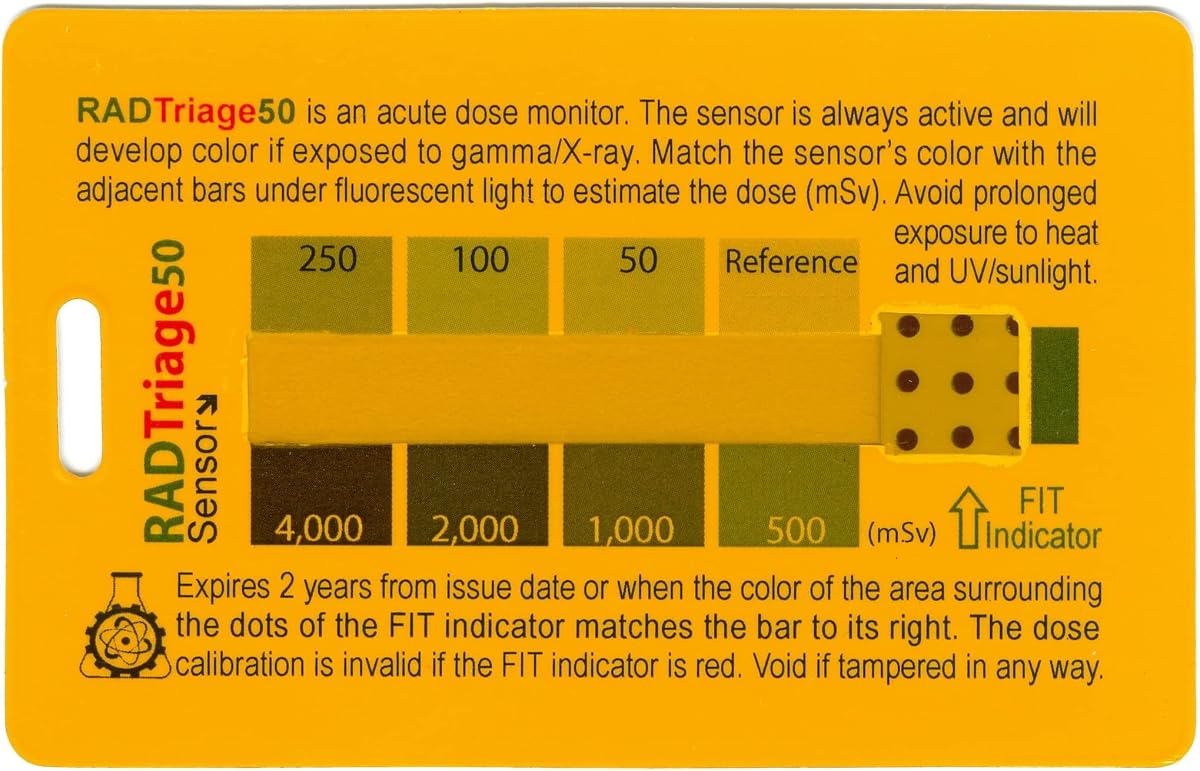
The Rad Triage 50 is a unique passive dosimeter designed to fit in a wallet or badge holder. It requires no batteries and offers immediate detection of Beta Gamma and X-ray radiation.
We may earn a commission when you buy through this link, at no additional cost to you.
With a shelf life of up to ten years it is ideal for emergency preparedness. The device is approved by the U.S. Dept of Homeland Security and is impervious to EMP bombs.
Unlike active monitors it does not provide real-time readings but serves as a critical backup. It is a simple yet reliable tool for personal safety during emergencies.
This model is perfect for those seeking a lightweight backup detection method. Its military-grade approval and long-term reliability make it a valuable addition to any emergency kit.
The long shelf life ensures readiness for unexpected events without the need for regular maintenance.
Battery-free operation eliminates the risk of power failure during critical situations.
We may earn a commission when you buy through this link, at no additional cost to you.
The New GQ GMC-320 Plus is a digital Geiger counter designed for accurate data recording and playback. It allows users to track radiation data and play it back later via PC.
We may earn a commission when you buy through this link, at no additional cost to you.
Its open communication protocol supports a wide range of radiation network setups. Technical support is available through the GQ Electronics website for additional assistance.
The one year factory warranty provides peace of mind for users relying on this device. Its straightforward design focuses on core functionality without unnecessary complexity.
This model is suitable for users who need reliable data logging. Its support and network capabilities make it a practical choice for basic monitoring networks.
Recording radiation data allows for later analysis without needing to keep the device constantly active.
Access to technical support forums helps users troubleshoot issues and maximize device performance.
We may earn a commission when you buy through this link, at no additional cost to you.
The GQ 320S Digital Nuclear Radiation Detector offers essential features for routine monitoring and data tracking. Real-time data logging captures every second into internal memory for detailed records.
We may earn a commission when you buy through this link, at no additional cost to you.
History data can be downloaded to a computer using the free PC viewer software. The swivel display option adds flexibility for viewing angles during use.
Long-lasting rechargeable batteries reduce the need for frequent replacements. Its multiple modes including dosimeter and CPM count make it versatile for different scenarios.
This model is a solid option for users seeking reliable data management. Its balance of features and usability makes it a good choice for general monitoring tasks.
The swivel display allows users to adjust the screen for comfortable viewing in different positions.
Downloading history data facilitates trend analysis and long-term radiation monitoring records.
We may earn a commission when you buy through this link, at no additional cost to you.
The ERICKHILL EMF Meter detects electric and magnetic fields to identify potential environmental concerns. It is a useful tool for checking household appliances and home safety.
We may earn a commission when you buy through this link, at no additional cost to you.
It features a clear LCD digital display and sound-light alarms for high EMF levels. The data hold function allows you to freeze readings for easy recording.
Note that this device measures electromagnetic fields rather than ionizing radiation like gamma or X-rays. It is best suited for general EMF assessments rather than nuclear detection.
Users looking to evaluate home electromagnetic exposure will find this meter helpful. Its ease of use and rechargeable battery make it a practical choice for household safety checks.
Detecting EMF hotspots in your home can help optimize your environment and reduce exposure.
Simple controls and clear displays make this device accessible for non-technical users.
We may earn a commission when you buy through this link, at no additional cost to you.
Selecting the right nuclear radiation detector requires understanding your specific needs and the features that matter most for your safety goals.
The sensor is the core component of any radiation detector. Geiger-Müller tubes are common and cost-effective while CsI scintillator sensors offer higher precision. Choose a sensor that matches the radiation types you need to detect such as Gamma Beta or Alpha.
Look for sensors with high sensitivity to ensure accurate detection even at low levels.
A clear display is essential for interpreting radiation data quickly. Color screens with dynamic curves provide better insights than basic numeric displays. Ensure the screen remains readable in sunlight and low-light conditions.
Prioritize models with intuitive interfaces to reduce user errors during operation.
Long battery life ensures uninterrupted monitoring during extended use. Rechargeable batteries are often preferred for convenience but check the charging port type. Some models offer multiple hours of continuous measurement before needing a recharge.
Select a device with a power solution that aligns with your usage frequency.
Effective alarm systems notify you when radiation levels exceed safe thresholds. Models with sound light and vibration alarms provide versatile notification options. Adjustable thresholds allow customization based on specific safety standards.
Choose a model with reliable alerts to ensure timely awareness of potential risks.
Data logging enables you to track radiation levels over time for trend analysis. Check if the device stores data internally and supports export to a computer. Free PC software can enhance your ability to review historical records.
Opt for devices with robust logging if you need detailed exposure records.
Portability is key for users who need to monitor multiple locations. Compact and lightweight designs are easier to carry during travel or field work. Durability features like drop resistance protect the device from accidental damage.
Balance size and ruggedness based on your typical usage environment.
Accuracy depends on proper calibration and the quality of the device. Models with built-in calibration mechanisms ensure consistent readings over time. Check user reviews for accuracy reports from real-world testing.
Prioritize devices with a track record of precision for critical safety applications.
Prices vary widely depending on features and brand. Set a budget that covers the essential features you need without unnecessary extras. A solid warranty provides protection against defects and manufacturing issues.
Compare total value including support and features rather than price alone.
Always start by reading the user manual to understand the specific controls and modes of your device. Ensure the detector is fully charged or has fresh batteries before beginning any monitoring task.
Position the sensor close to the source you want to test but maintain a safe distance as recommended. Avoid touching the sensor window directly to prevent contamination or damage.
Regularly calibrate your device if the model supports it and store it in a dry and cool place. Clean the exterior gently with a soft cloth and avoid exposing the unit to extreme temperatures or moisture.
A nuclear radiation detector measures ionizing radiation such as gamma beta and X-rays to ensure environmental and personal safety. It is commonly used for home checks geological surveys and professional safety inspections.
Geiger counters are generally accurate for detecting radiation levels but accuracy varies by model and sensor type. High-end models offer better precision while basic units provide reliable general readings for most users.
Some detectors require periodic calibration to maintain accuracy while others come pre-calibrated. Always check the manufacturer guidelines to know if and how often you need to recalibrate your device.
Most basic Geiger counters detect Gamma and Beta rays but may miss Alpha particles without a specific window sensor. Premium models offer broader detection capabilities including X-rays and Alpha radiation depending on their design.
Readings are typically displayed in units like CPM μSv/h or mSv. Higher numbers indicate stronger radiation levels and many devices provide color-coded alerts to help you quickly assess safety.
Yes these devices are safe to use around children as they do not emit radiation themselves. However ensure that the device is handled properly and kept away from small parts to prevent accidental ingestion or damage.
No licenses are typically required for personal use of basic radiation detectors. However commercial or industrial use may involve specific regulatory requirements depending on your local laws and safety standards.
Most digital detectors last several years with proper care and battery replacement. Passive dosimeters like the Rad Triage have shelf lives up to ten years but may require replacement after exposure.
The HFS-50-CsI GQ GMC-300S and Radar-9989 stand out as top choices for accuracy reliability and value across different user needs. Each offers unique features tailored to casual monitoring or professional use.
Prioritize sensor type battery life and data logging based on your specific safety requirements. A device that aligns with your monitoring frequency and environment will provide the best long-term value.
Remember to check current prices and availability before purchasing to ensure you get the best deal. With the right detector you can monitor radiation levels confidently and keep your environment safe.