
Digital pH Meter Tester Pen for Water
3.9Editor score
Pre-calibrated for immediate use
Compact and portable design
High accuracy readings
This guide compares the best Ph Meters for food, hydroponics, and water testing, featuring top-rated models with high accuracy and reliable performance for
Finding the right Ph Meter is essential for anyone involved in food safety, hydroponics, or water quality monitoring. A reliable device ensures accurate readings, helping you maintain optimal conditions for your specific needs.
We have carefully evaluated ten top-rated Ph Meters based on accuracy, ease of use, durability, and specialized features. Each product was selected to meet the diverse requirements of home brewers, gardeners, and food enthusiasts.
Each pick highlights key specifications, pros, cons, and ideal use cases to help you make an informed decision. Please note that product availability and pricing may change, so verify details before purchasing.
3.9Editor score

4.6Editor score

4.5Editor score
The following table provides a side-by-side comparison of all ten selected Ph Meters, highlighting their core specifications, accuracy levels, and primary applications to help you quickly identify the best fit.



This Food pH Meter stands out as a top choice for home cooks and fermentation enthusiasts. With a 4.6-star rating, it offers precision and smart features that simplify the testing process for various food items.
We may earn a commission when you buy through this link, at no additional cost to you.
Its Bluetooth connectivity allows users to save and track pH data over time via the YINMIK app, making it ideal for long-term projects like sourdough starters or cheese aging. The included calibration solutions ensure accurate readings from the first use.
While the app adds value, users without smartphones may find some features less accessible. Additionally, maintaining the probe requires consistent care to ensure longevity. These trade-offs are minor compared to the benefits of digital tracking.
Buyers seeking a versatile tool for food safety and fermentation will appreciate this model. It balances ease of use with advanced features, making it a strong recommendation for serious home producers.
The app integration allows historical pH data analysis, helping users identify trends in fermentation or canning safety.
Designed to help identify high and low acid foods, this meter ensures safe canning practices for home cooks.
We may earn a commission when you buy through this link, at no additional cost to you.
The Apera Instruments AI209 Value Series is a robust pH tester designed for field use. Its waterproof construction and rugged case make it suitable for outdoor testing environments where durability is key.
We may earn a commission when you buy through this link, at no additional cost to you.
It features automatic temperature compensation and auto recognition of stable values, ensuring reliable readings without manual intervention. The low impedance sensor provides a high response rate for quick measurements.
However, its accuracy is ±0.1 pH, which may not suffice for applications requiring extreme precision. Users might need to recalibrate frequently if conditions vary significantly. This is acceptable for general water testing.
This model is ideal for those needing a reliable, portable solution for pools, aquariums, or general water quality checks. Its build quality and ease of use make it a solid value choice.
The waterproof build and included case protect the meter from harsh environments during outdoor use.
Auto recognition of stable values eliminates guesswork, ensuring measurements are taken at the right time.
We may earn a commission when you buy through this link, at no additional cost to you.
The Apera AI311 Premium Series offers high precision with ±0.01 pH accuracy, making it suitable for demanding applications like hydroponics or scientific testing. Its replaceable probe extends the device's lifespan significantly.
We may earn a commission when you buy through this link, at no additional cost to you.
Features like auto calibration and temperature compensation ensure accuracy across various conditions. The smiley icon indicates stable readings, reducing user error during measurement. The included kit has all necessary solutions for immediate use.
While the price is higher than basic testers, the investment pays off in long-term reliability and precision. Users must handle the glass probe carefully to avoid breakage. This is a standard trade-off for lab-grade quality.
This model is perfect for professionals or serious hobbyists needing accurate data. It combines premium features with portability, making it a top choice for high-quality water and solution testing.
The ±0.01 pH accuracy ensures precise readings, crucial for sensitive applications like hydroponics or scientific research.
A replaceable probe allows users to maintain accuracy without replacing the entire unit, reducing waste and cost.
We may earn a commission when you buy through this link, at no additional cost to you.
This GIDIGI pH meter is specifically designed for testing semi-solid food samples like dough, meat, and cheese. The spear probe allows direct penetration, providing accurate readings without damaging the food texture.
We may earn a commission when you buy through this link, at no additional cost to you.
It offers lab-grade precision with ±0.01 pH accuracy and fast 30-second readings. The waterproof body and backlit screen make it versatile for kitchen and brewery environments. Calibration is straightforward with included solutions.
Users should note that the probe needs regular maintenance to ensure longevity. While primarily for food, it can work for other liquids. The specific design limits its universality but excels in its niche.
This model is ideal for sourdough bakers, cheese makers, and canners who need reliable pH data. Its targeted design ensures accurate measurements where standard probes fail, making it a valuable kitchen tool.
The spear tip penetrates thick samples like dough and cheese, enabling direct testing without prep work.
With 30-second readings, users get quick feedback on fermentation or preparation steps, saving time.
We may earn a commission when you buy through this link, at no additional cost to you.
This Digital pH Meter Tester Pen offers an affordable entry point for basic pH testing. It is pre-calibrated and ready to use, making it ideal for quick checks of drinking water or pools.
We may earn a commission when you buy through this link, at no additional cost to you.
The compact design allows for easy portability, and the 0.01 pH accuracy is decent for general use. However, long-term stability may vary compared to more expensive models. Users should recalibrate periodically for best results.
While it lacks advanced features, it fulfills the needs of casual users effectively. The low price point makes it accessible for those testing on a budget. It may not be suitable for professional or high-precision needs.
For occasional water testing or travel, this pen is a convenient choice. It balances cost and functionality, providing a reliable solution for basic home maintenance tasks without breaking the bank.
The pocket size design allows users to carry the meter anywhere, making it convenient for travel or field testing.
At a budget-friendly price, this model offers a cost-effective way to monitor pH levels without major investment.
We may earn a commission when you buy through this link, at no additional cost to you.
The Apera AI316 Premium Series is a versatile 5-in-1 tester that measures pH, EC, TDS, salinity, and temperature. It is perfect for hydroponics, aquaculture, and water quality monitoring where multiple parameters are critical.
We may earn a commission when you buy through this link, at no additional cost to you.
The replaceable multi-parameter probe simplifies maintenance. Its large LCD screen displays dual values clearly, helping users make quick adjustments. The smiley icon ensures readings are stable before recording.
While the functionality is extensive, it may be more than what casual users need. The higher price reflects the advanced capabilities. Users must understand all metrics to fully utilize this device effectively.
This model is excellent for growers and professionals managing complex systems. Its ability to track multiple variables in one device streamlines monitoring and ensures comprehensive water health analysis.
By measuring pH, EC, TDS, and salinity simultaneously, this tester provides a complete picture of water quality.
The replaceable probe design allows users to change only the sensing part, extending the device's overall lifespan.
We may earn a commission when you buy through this link, at no additional cost to you.
The Bluelab pH Pen is a trusted tool in hydroponics and growing applications. Its double-junction probe minimizes contamination, ensuring precise readings even in nutrient-rich environments. The 0.1 pH accuracy is suitable for most growing needs.
We may earn a commission when you buy through this link, at no additional cost to you.
It features automatic temperature compensation for accurate results in varying conditions. The kit includes calibration solutions and a 30-day calibration indicator on the display. Setup is straightforward for quick deployment.
Readings in distilled or RO water may be slower due to low ion content. This is a limitation of most pH pens but acceptable for typical nutrient solutions. Users should avoid storing it dry.
For hydroponic growers, this pen provides reliable pH control for optimal nutrient uptake. Its durability and ease of use make it a staple in grow tents and water management systems.
The double junction design minimizes electrolyte contamination from samples, improving probe lifespan and reading reliability.
Optimized for hydroponics, this pen helps maintain the nutrient balance needed for healthy plant growth.
We may earn a commission when you buy through this link, at no additional cost to you.
This YINMIK pH Meter is designed for hydroponic growers needing to monitor nutrient solutions continuously. Its stainless steel electrode responds quickly, and ATC ensures accuracy across temperatures. It can stay immersed in equipment for real-time tracking.
We may earn a commission when you buy through this link, at no additional cost to you.
The 4-in-1 functionality covers pH, TDS, EC, and temperature, helping manage plant health. It includes calibration solutions for immediate use. Customer support is responsive, adding peace of mind for buyers.
Users must ensure the device is used in compatible liquids to avoid sensor damage. While versatile, it is optimized for plant solutions. This focus ensures reliability in specific growing environments.
Ideal for indoor gardening, this meter simplifies nutrient management. Its continuous monitoring feature saves time and helps prevent pH swings that could harm crops.
The ability to leave the probe immersed allows real-time data collection without constant manual intervention.
Designed for hydroponics, it provides the precise metrics needed to optimize nutrient uptake for plants.
We may earn a commission when you buy through this link, at no additional cost to you.
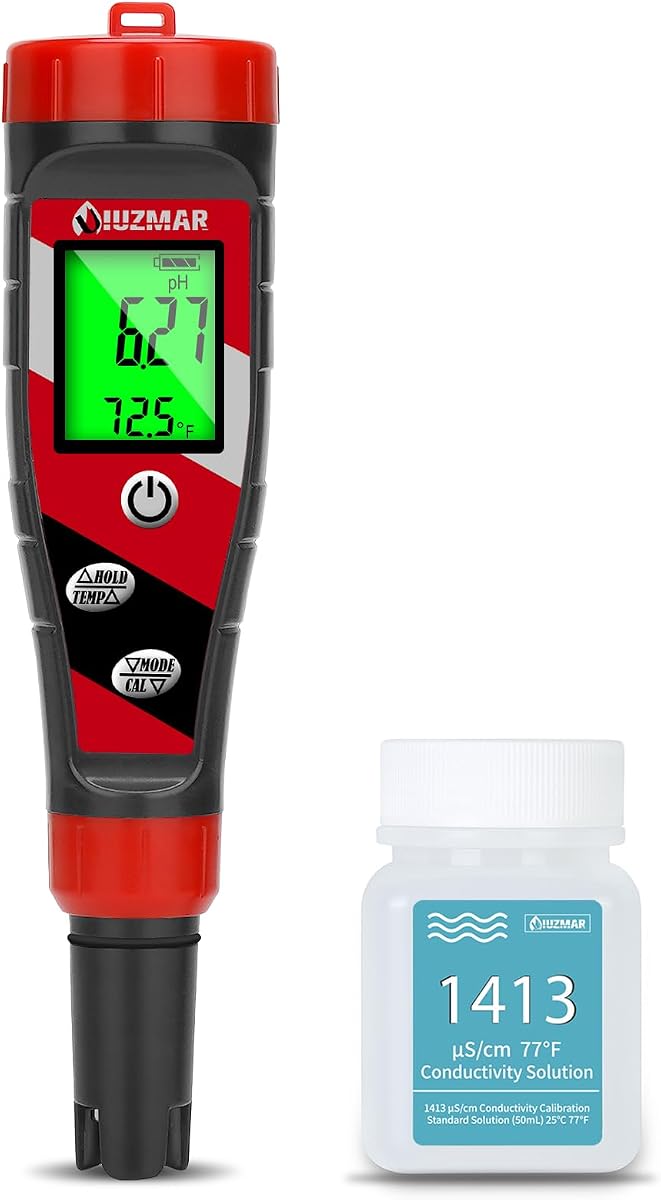
The UIUZMAR pH Meter is a reliable tool for indoor growers managing hydroponic systems. It monitors pH, EC, and temperature to optimize plant conditions. The clear display makes it easy to track necessary adjustments quickly.
We may earn a commission when you buy through this link, at no additional cost to you.
Its advanced probe ensures stable readings for nutrient testing. The 4-in-1 functionality helps determine when to add nutrients or adjust pH levels. It is suitable for DWC and other indoor setups.
While the meter offers great value, users should perform regular calibration to maintain accuracy. It is designed for specific growing contexts. This focus ensures relevant data for plant health management.
For home growers, this meter simplifies complex water quality checks. It provides essential data to maintain the right environment for herbs, vegetables, and flowers without requiring professional equipment.
Designed for indoor setups, this meter helps maintain the precise environmental conditions plants need to thrive.
The intuitive screen allows users to read multiple values simultaneously, speeding up adjustment decisions.
We may earn a commission when you buy through this link, at no additional cost to you.
This YINMIK Food pH Meter is designed for testing sourdough, fermented foods, and cosmetics. The spear probe eliminates the need for slurry preparation, allowing direct testing of lotions or food samples. Stability is enhanced with extra chips.
We may earn a commission when you buy through this link, at no additional cost to you.
It features a KCL wet sponge in the protective cap to keep the probe moist. Calibration is supported with included powder packets for long-term use. This care extends the probe's functional life significantly.
Users must follow calibration steps carefully for accuracy. The meter is robust but requires some effort to maintain. These trade-offs are acceptable for the precision it offers in varied testing scenarios.
Ideal for food artisans and cosmetic makers, this meter ensures product safety and quality. Its versatility makes it a valuable tool for those producing homemade goods requiring strict pH control.
The spear probe allows direct testing of solid foods and cosmetics without complex sample preparation.
The KCL wet sponge cap keeps the probe moist, maintaining sensitivity and extending the device's usable life.
We may earn a commission when you buy through this link, at no additional cost to you.
Selecting the right Ph Meter depends on your specific needs, whether for food safety, hydroponics, or general water testing. Consider accuracy, probe type, and features to find the best model.
Accuracy determines how precise your measurements will be. For general water testing, ±0.1 pH may suffice, while lab-grade work or fermentation requires ±0.01 pH.
Always choose a meter with accuracy matching your application's strictness to ensure reliable data.
Probes vary from standard glass to spear tips. Spear probes are essential for semi-solids like dough or cheese, while glass probes suit liquids.
Select a probe that can handle the texture of your samples without damage or contamination.
Temperature affects pH readings. Automatic Temperature Compensation (ATC) adjusts measurements to standard conditions, preventing errors caused by sample heat or cold.
Ensure your meter includes ATC for accurate results across varying environmental conditions.
Regular calibration is crucial for accuracy. Look for meters with auto-calibration features and included buffer solutions to simplify the process.
Easy calibration workflows save time and reduce the risk of user error during setup.
Some advanced meters offer Bluetooth connectivity to track historical data. This is useful for fermentation projects requiring trend analysis over time.
Consider if digital logging aligns with your workflow needs and comfort with app usage.
Field use requires rugged construction. Waterproof designs and carrying cases protect the device from damage during transport or outdoor testing.
Invest in durability if you plan to use the meter in harsh or variable environments.
Long battery life ensures uninterrupted testing. Some models offer up to 2000 hours of operation, reducing the need for frequent changes.
Prioritize energy efficiency if you use the device frequently or in remote locations without easy power access.
Budget options may lack precision or durability, while premium models offer advanced features. Balance cost with the features your specific tasks require.
Choose a model that offers the best functionality within your budget without overpaying for unnecessary features.
Before use, calibrate the meter using buffer solutions provided. For best accuracy, perform calibration at the same temperature as your samples and follow the device's manual steps carefully.
After each use, rinse the probe with distilled water and store it in the provided storage solution to keep the sensor moist and functional. Avoid letting the probe dry out completely.
Regular maintenance includes checking for damage, replacing the probe if readings drift, and cleaning the display and casing. Proper care ensures longevity and reliable performance over time.
Calibrate before each new project or weekly if used frequently. For high-precision work, daily calibration is recommended. Always use fresh buffer solutions to ensure accurate results.
Most pH pens are designed for liquids. For soil, create a slurry with distilled water and measure the liquid. Specialized soil sensors are more accurate for solid samples.
Unstable readings may result from temperature variations, dirty probes, or low-quality solutions. Ensure the sample is consistent and the probe is clean. Wait for stabilization indicators before recording.
ATC stands for Automatic Temperature Compensation. It adjusts pH readings based on the sample's temperature to ensure accuracy regardless of thermal conditions during testing.
Store the probe in a storage solution or pH 4 buffer to keep the electrode hydrated. Never store it in distilled water, as this can leach ions and damage the sensor.
Expensive models offer better accuracy, durability, and features. If precision is critical, they are worth the investment. For casual use, budget options often suffice.
This guide highlights ten top Ph Meters suited for food, hydroponics, and water testing. From budget-friendly pens to premium precision tools, each option offers unique benefits for specific needs.
Prioritize accuracy and probe type based on your primary use case. Reliable models like the Apera AI311 for precision or GIDIGI for food provide excellent value for serious users.
Always check current product details and pricing before purchasing to ensure the best value. With the right Ph Meter, maintaining quality in your projects becomes effortless.