
Channel Master TV Antenna Signal Strength Meter
3.9Editor score
Supports all ATSC frequencies
Color touch-screen display
Includes stylus and carrying case
Finding the right cellular signal meter for antenna aiming is essential for anyone installing boosters or optimizing network coverage. These tools provide real-time feedback on signal strength, ensuring your antenna is pointed in the correct direction for maximum performance and reliability.
We compared ten leading models based on frequency coverage, accuracy, battery life, and ease of use. Our analysis includes professional spectrum analyzers and budget-friendly handheld meters to suit various needs from DIY enthusiasts to network technicians.
Each pick below highlights key features, pros, and cons to help you decide. Prices and availability change frequently, so verify current details on the product pages before making a purchase decision for your specific setup.
3.9Editor score

4.3Editor score

4.6Editor score
As an Amazon Associate we earn from qualifying purchases.
The following table provides a side-by-side comparison of all ten products to help you evaluate their key specifications at a glance.


The SureCall Five-Band RF Signal Meter is a robust tool designed specifically for installing cell phone signal boosters. With a rating of 4.3 stars, users appreciate its ability to cover five distinct frequency bands including PCS, Cellular, AWS, and LTE. It provides real-time feedback to ensure optimal antenna positioning.
We may earn a commission when you buy through this link, at no additional cost to you.
This meter stands out due to its high receiving sensitivity of -110dBm, allowing it to detect weak signals that other meters might miss. The rechargeable design using four AAA NiMH batteries offers flexibility, and the controllable backlight ensures visibility in dark environments like attics or basements during installation.
While the battery life ranges between 2.5 to 3.5 hours which is adequate for most jobs, some users note it can vary based on usage intensity. Additionally, the lack of GPS integration means you cannot log signal strength by location, which might be a limitation for large-scale surveys.
This meter is best suited for homeowners and technicians installing cellular boosters who need reliable, band-specific feedback. If you prioritize sensitivity and backlight control over advanced mapping features, this model is a solid choice for your toolkit.
It supports PCS, Cellular, AWS, and two LTE bands ensuring compatibility with major carriers across the US.
Uses four AAA NiMH batteries for extended field use without needing constant replacements during long install days.
We may earn a commission when you buy through this link, at no additional cost to you.
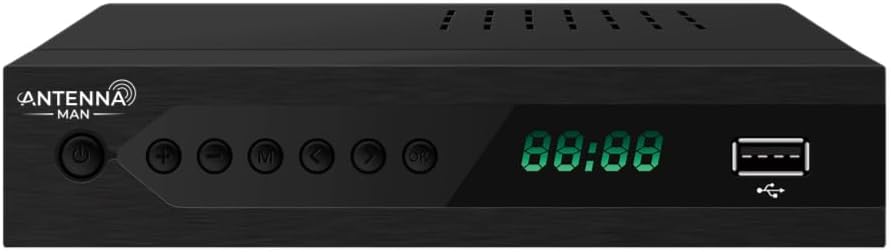
The Antenna Man Signal Meter serves as a straightforward tool for checking signal strength during antenna installation. It functions as an ATSC digital converter box with a TV tuner and recording capability. Users rate it 3.8 stars for its simplicity and ease of getting started without complex setup steps.
We may earn a commission when you buy through this link, at no additional cost to you.
Its main strength lies in the real-time signal strength display which helps users see immediate changes when adjusting an antenna's direction. The plug-and-play nature means it requires minimal technical knowledge to operate, making it accessible for DIYers who need quick verification of signal levels.
However, this device is more of a converter box than a dedicated RF meter, so it lacks the precision of specialized tools. It is limited to ATSC frequencies which means it is not suitable for cellular or broadband signal aiming applications requiring broader band analysis.
Choose this if you need a basic tool for OTA TV antenna alignment that doubles as a recorder. It is not recommended for cellular booster installations where precise frequency band data is critical for performance.
Get instant visual feedback on signal strength to guide antenna direction adjustments during setup.
Minimal setup is required allowing you to start testing signals immediately after connecting to your antenna.
We may earn a commission when you buy through this link, at no additional cost to you.
The Berkeley Varitronics Octopus 4G LTE is a professional-grade meter designed for EV charging stations, cell boosters, and IoT devices. With a high rating of 4.6 stars, it offers true RSRP RSRQ and RSSI measurements essential for network planning. It works without SIM cards or apps simplifying the testing process.
We may earn a commission when you buy through this link, at no additional cost to you.
This device supports AT&T Verizon T-Mobile and all US regional carriers making it versatile for various deployments. The fact that it is designed and manufactured in the USA adds to its reliability and quality assurance. It is perfect for utility telematics alarm installs and cellular booster installations requiring precise data.
The main trade-off is its high price compared to consumer meters which may not be justifiable for casual users. Additionally, it is specialized for 4G LTE and may not cover newer 5G bands explicitly in its description limiting future-proofing for some advanced networks.
Invest in this if you need precise network metrics for commercial or industrial deployments like EV stations. It is less suited for homeowners who only need basic signal strength verification for personal booster setups.
Provides detailed network metrics essential for professional signal quality assessment and planning.
Test networks without needing active subscriptions or connected devices reducing setup complexity.
We may earn a commission when you buy through this link, at no additional cost to you.
The RF Explorer Pro Spectrum Analyzer is an all-in-one RF measurement platform for engineers and professionals. It combines a spectrum analyzer power meter and tracking generator in a compact portable design. With no current rating data it is marketed for its high-definition touchscreen and advanced RF analysis tools.
We may earn a commission when you buy through this link, at no additional cost to you.
Features include Zero Span Tracking Generator and 2D/3D Waterfall views for clear real-time visualization. The 8-inch high-definition touchscreen with 16.7 million colors ensures detailed graphs are easy to read. It also supports GPS heatmaps and frequency coordination modes for comprehensive site surveys.
The lack of a current rating makes it hard to gauge user satisfaction but the technical specs are impressive. It can be complex for beginners and may require training to fully utilize all its capabilities for optimal results.
This is ideal for RF professionals and advanced users who need detailed spectrum analysis. If you require a powerful tool for interference analysis and cable diagnostics this unit offers extensive capabilities.
Includes features like Zero Span and Waterfall for deep dive signal analysis in complex environments.
Choose configurations from 3.3GHz to 7.5GHz to match specific analysis needs flexibly.
We may earn a commission when you buy through this link, at no additional cost to you.
The NetAlly AirCheck G3 Pro Kit is a high-end solution for testing Wi-Fi and Bluetooth networks. It supports Wi-Fi 6/6E and includes a tri-band spectrum analyzer for detailed signal analysis. Users have given it a perfect 5-star rating for its advanced capabilities and comprehensive kit contents.
We may earn a commission when you buy through this link, at no additional cost to you.
It offers physical location detection to find access points quickly and supports remote collaboration for site surveys. The kit includes an external directional antenna and a shoulder sling bag making it practical for field use. Centralized data management allows for easy integration with network management systems.
Despite the high price and focus on Wi-Fi rather than cellular the depth of features justifies it for network admins. It is overkill for simple antenna aiming but unmatched for enterprise Wi-Fi troubleshooting and validation.
Choose this if you are an IT professional managing enterprise networks. It is not recommended for general cellular booster installation unless you also need extensive Wi-Fi analysis capabilities.
Quickly find access points on 2.4GHz 5GHz and 6GHz bands for precise troubleshooting.
Use remote collaboration to troubleshoot tough problems faster saving time and travel costs.
We may earn a commission when you buy through this link, at no additional cost to you.
The Extech 480836 is a high-frequency meter ideal for measuring EMF from mobile phones and base stations. It has a rating of 4.3 stars and offers a triaxial measurement probe for accurate isotropic readings. Users appreciate its ability to measure microwave leakage and general RF field strength.
We may earn a commission when you buy through this link, at no additional cost to you.
Its non-directional nature makes it great for safety checks but less useful for aiming directional antennas where directionality matters. It allows manual store and recall of up to 99 sets which helps in documenting readings over time without manual note-taking.
While it covers up to 3.5GHz which includes some cellular bands it is not optimized for specific band aiming. You might miss detailed feedback on signal strength compared to dedicated cellular meters.
Use this for safety surveys and general EMF checks. For precise antenna aiming especially for directional boosters look for a more specialized tool.
Three-channel triaxial probe ensures accurate readings regardless of probe orientation.
Store up to 99 sets of readings for later reference and documentation.
We may earn a commission when you buy through this link, at no additional cost to you.
The MINI1300 Antenna Analyzer features a 4.3 inch LCD touching screen and covers frequencies from 0.1 to 1300MHz. Rated 4.4 stars it supports HF VHF and UHF bands with single point and scanning modes. It is compact and portable making it easy to carry for field work.
We may earn a commission when you buy through this link, at no additional cost to you.
The large touchscreen makes it easy to operate in the field or workshop. It offers SWR measurement from 1.0 to 19.9 in single point mode which helps verify antenna performance. However, firmware cannot be updated which may limit long-term compatibility.
For cellular aiming above 1300MHz this device falls short as it does not cover 4G LTE bands. It is excellent for ham radio or general RF work but not for specific cellular booster installation tasks.
Buy this for general antenna tuning in HF VHF ranges. Avoid if you need precise 4G LTE or higher frequency cellular aiming data.
Continuous coverage from 0.1 to 1300MHz for diverse RF applications.
Support single point measurement frequency sweep and TDR mode for flexible analysis.
We may earn a commission when you buy through this link, at no additional cost to you.
The SA6 integrates a spectrum analyzer and signal generator into a handheld unit. It covers 35 to 6200MHz which includes Wi-Fi and cellular bands like LTE and GSM. The 3.2-inch touchscreen allows real-time spectrum viewing and operation via buttons or touch.
We may earn a commission when you buy through this link, at no additional cost to you.
It supports USB connectivity for PC logging and includes a rechargeable battery providing 3 to 4 hours of runtime. The lightweight design at 380g makes it easy to carry for engineers and technicians. However, it lacks a current user rating for verification.
While the range is broad the build quality and accuracy may not match higher-end units. It is a good entry-level tool for hobbyists or repair shops needing quick RF checks without a large budget.
Choose this for versatile testing across Wi-Fi and cellular. For critical installs a more professional tool might be needed for higher reliability.
Supports up to 6200MHz covering most common wireless technologies.
Switch instantly to generator mode for component characterization without extra gear.
We may earn a commission when you buy through this link, at no additional cost to you.
This handheld model offers a compact design for RF analysis covering 35 to 6200MHz. It includes an integrated tracking generator for stable output and supports WiFi LTE GSM and GLONASS. The rugged housing is lightweight and energy efficient for technicians on site.
We may earn a commission when you buy through this link, at no additional cost to you.
It provides real-time spectral measurement with fast scan speeds for quick environmental assessment. Accessories include extension cables and a data cable making it ready to use out of the box. Like the SA6 it lacks user ratings for quality confirmation.
The fixed 200 kHz resolution may limit detail in crowded RF environments. It is a solid choice for field technicians but should be verified for accuracy on specific bands.
Use for general RF evaluation and troubleshooting in labs or tight spaces. Ensure it fits your specific frequency requirements before purchase.
Compact housing ideal for field work and maintenance teams.
Delivers stable output for component characterization and measurements.
We may earn a commission when you buy through this link, at no additional cost to you.
The Channel Master TV Antenna Signal Strength Meter is a digital handheld tool for OTA antenna alignment. It displays RF signal level and signal to noise ratio on a color touch-screen. Users can rely on its built-in rechargeable battery and includes a stylus and carrying case.
We may earn a commission when you buy through this link, at no additional cost to you.
It supports all over-the-air ATSC TV frequencies within the USA making it perfect for TV antenna aiming. The color display helps distinguish between different signal strengths quickly. While rated 3.9 stars it offers a user-friendly interface for basic tasks.
It is strictly limited to TV signals and cannot measure cellular or broadband. For that purpose it is unsuitable. However for home TV installations it provides a cost-effective solution with clear display.
Buy for precise OTA antenna alignment. Do not use for cellular booster or IoT signal testing.
Supports all over-the-air ATSC TV frequencies within USA for precise alignment.
Displays RF signal level and Signal to Noise ratio for accurate tuning.
We may earn a commission when you buy through this link, at no additional cost to you.
Selecting the right cellular signal meter involves understanding your specific needs and technical requirements.
Ensure the meter covers the bands used by your carrier such as LTE 4G or 5G. Meters like the Berkeley Varitronics cover multiple bands including AWS and PCS which are common in the US. Lack of band support limits utility significantly.
Choose a meter that explicitly lists the frequencies you need for your installation.
Look for true RSRP RSRQ and RSSI measurements which provide detailed signal quality data. Meters that only show bars may not give enough precision for complex installations. Higher accuracy ensures better antenna positioning.
Prioritize tools that offer detailed numerical data over simple visual indicators.
Long working times are essential for field work. Rechargeable designs or replaceable batteries reduce downtime. Tools like the SureCall offer 2.5 to 3.5 hours of runtime which is practical for most tasks.
Select a device with sufficient battery capacity to complete your installation without interruption.
A portable and lightweight device is easier to carry during installation. Touchscreens and physical buttons can enhance usability in different environments. Consider weight and ruggedness if working outdoors.
Choose a design that balances functionality with ease of transport for your needs.
Features like USB connectivity or GPS help log and analyze data over time. Some models allow PC logging which is useful for documentation. These features can save time during larger projects.
Look for connectivity options that support your data tracking requirements.
Plug-and-play operation minimizes setup time and technical barriers. Clear displays and intuitive interfaces allow quick adjustments. For beginners avoid overly complex analyzers unless necessary.
Prioritize user-friendly interfaces to streamline the aiming process.
Cost varies widely from budget models to professional gear. Assess your budget against required features to avoid overspending. Budget options work for basic tasks while premium tools are better for detailed analysis.
Balance price with features to get the best value for your specific use case.
Ensure the meter is compatible with the type of antenna and booster you use. Some meters are specific to TV OTA signals while others support cellular. Match the tool to your project scope accurately.
Verify compatibility with your existing equipment before making a purchase.
Start by connecting the meter to your antenna or signal source securely. Ensure the device is powered on and set to the correct frequency band for your carrier. This setup ensures accurate readings and prevents interference from unused bands.
Move the antenna slowly while watching the signal strength indicators. Look for the peak reading and lock the antenna in that position. Adjustments should be made carefully to avoid disrupting the signal lock.
After use store the meter in a dry cool place to protect electronics. Keep batteries charged or stored properly to extend life. Regularly check for firmware updates if applicable to maintain performance.
You should look for meters that cover the bands used by your specific carrier such as LTE 4G or 5G. Common bands include PCS Cellular AWS and LTE. Choosing a meter that supports these ensures you can measure the actual signals you need.
You can tell your antenna is aligned correctly when the signal strength indicators show the highest possible reading. Adjust the antenna direction slowly until you reach the peak value and note the position to lock it in place.
No many meters like the Berkeley Varitronics do not require a SIM card or phone to measure signals. They are designed to read the RF environment directly which simplifies testing and avoids subscription costs.
For basic aiming a standard signal meter is sufficient and more affordable. A spectrum analyzer is useful for professionals who need to detect interference or analyze multiple frequencies simultaneously for complex installations.
No TV antenna meters are designed for ATSC frequencies which are different from cellular bands. Using a TV meter for cellular will not provide accurate readings so you need a cellular-specific device.
Battery life varies but typically ranges from 2 to 4 hours depending on usage. Some models offer rechargeable designs which are convenient for field work without needing frequent replacements.
Advanced meters show both signal strength and quality metrics like SNR RSRP and RSRQ. Basic models may only show strength levels so check specifications if you need detailed quality data for troubleshooting.
Many include carrying cases styluses or extension cables to assist with field use. Check individual product details to see what is included and ensure you have what is needed for your specific setup.
The SureCall Five-Band RF Signal Meter Berkeley Varitronics Octopus and Channel Master offer distinct options for different budgets and needs. Each provides tools to ensure your antenna is aimed correctly for optimal performance.
Prioritize frequency band support and accuracy when making your decision. A tool that matches your specific requirements will save time and improve installation results significantly over a generic device.
Remember to check current prices and availability before purchasing as these details change. Verify compatibility with your carrier and equipment to ensure a successful setup experience.