
TopTes TS-301 Digital Anemometer
4.5Editor score
Large 2.26-inch LCD screen
Measures 6 wind units
Includes temperature and humidity sensors
This guide compares the top 10 Pocket Weather Meter options for outdoor enthusiasts, HVAC professionals, and shooters to help you choose the right tool for
Finding the right Pocket Weather Meter is essential for anyone who needs accurate environmental data on the go. Whether you are an outdoor enthusiast, a professional technician, or a precision shooter, having reliable wind speed, temperature, and humidity readings can make a significant difference in your activities.
We evaluated ten distinct models based on their accuracy, portability, feature sets, and build quality. Our analysis focused on how well each device performs in real-world scenarios, from measuring HVAC airflow to tracking weather conditions during sailing or shooting sessions.
Each pick below highlights specific strengths and ideal use cases to help you narrow down your choice. Please note that product availability and pricing may change over time, so verify current details before making a purchase decision.
4.5Editor score

4.2Editor score

5.0Editor score
The following table provides a side-by-side comparison of all ten Pocket Weather Meter models reviewed in this guide to help you quickly identify the best fit for your specific requirements.



This HoldPeak model stands out as a versatile tool for anyone needing comprehensive environmental data in a handheld format. With a solid rating, it offers reliable performance across various metrics including wind speed, humidity, and barometric pressure.
We may earn a commission when you buy through this link, at no additional cost to you.
Its standout features include the ability to log barometric pressure data and calculate altitude based on that data. The included hand strap and tripod hole enhance usability during extended sessions or when hands-free operation is preferred.
While it is slightly heavier than some ultra-compact options, the added weight supports a robust build quality. The requirement to consult the manual for optimal setup is a minor trade-off for the depth of functionality provided.
For outdoor enthusiasts and professionals who need more than just wind speed, this device delivers exceptional value. It is highly recommended for those seeking a balance of features and portability in a single pocket weather meter.
The barometric data logging feature allows users to track pressure changes over time which helps in predicting weather trends accurately.
Users can switch between multiple units for wind speed and temperature ensuring compatibility with different regional standards and preferences.
We may earn a commission when you buy through this link, at no additional cost to you.
The TopTes TS-301 is an excellent entry-level option for those seeking a reliable Pocket Weather Meter without breaking the bank. Its large LCD screen ensures readings are clear even in challenging lighting conditions.
We may earn a commission when you buy through this link, at no additional cost to you.
This device covers essential metrics like wind speed, temperature, and humidity making it suitable for a wide range of activities from sailing to HVAC checks. The automatic shutdown feature helps conserve battery life effectively.
While it lacks the premium build of higher-end models, its lightweight design makes it easy to carry during outdoor adventures. The non-rechargeable battery is a simple trade-off for extended runtime without needing a charger.
We recommend this meter for hobbyists and casual users who need basic weather data. It provides great value and performance for everyday tasks requiring accurate air flow measurements.
The large screen and simple button layout make it easy to operate even for first-time users or those wearing gloves outdoors.
Automatic power-off after inactivity ensures the battery lasts longer reducing the need for frequent replacements during travel or work.
We may earn a commission when you buy through this link, at no additional cost to you.
This Vortex Ace model is designed for those who demand the highest level of precision and durability. It integrates advanced ballistic solutions directly into the device making it a top choice for serious shooters.
We may earn a commission when you buy through this link, at no additional cost to you.
The full-color display and rugged construction ensure that data is easy to read and the device can withstand harsh environments. Its waterproof and shockproof design adds to its reliability in the field.
While the price is higher than standard weather meters, the specialized features justify the cost for users who need accurate drop and wind calculations. The lifetime warranty further enhances its value proposition.
For professional shooters and outdoor enthusiasts who prioritize accuracy above all else, this device is unmatched. It offers a complete solution for environmental data and ballistic adjustments in one handheld unit.
The built-in solver uses real-time weather data to provide precise wind and drop solutions reducing the need for external calculators or apps.
Constructed to handle drops and extreme weather this meter ensures consistent performance even when subjected to rough outdoor conditions regularly.
We may earn a commission when you buy through this link, at no additional cost to you.
The Ambient Weather WM-5 offers a unique pocket-knife design that makes it incredibly easy to carry in any pocket. It is ideal for users who prioritize portability above all else.
We may earn a commission when you buy through this link, at no additional cost to you.
Its water resistant design means it can handle rain or accidental drops in water without damage. The included carrying case and neck lanyard ensure it is always within reach and protected from scratches.
While it lacks temperature and humidity sensors, it excels at measuring wind speed and gusts accurately. This simplicity makes it perfect for quick checks during outdoor activities where extra features are not needed.
We recommend this meter for hikers or travelers who need a lightweight backup weather tool. It provides reliable wind data in a package that fits easily into any small bag or pocket.
The foldable design protects the sensor blades when not in use reducing wear and tear during storage or transport.
Built to float and resist water this device ensures you can use it near water or in rain without worrying about damage.
We may earn a commission when you buy through this link, at no additional cost to you.
At just 53 grams, this device is one of the lightest options available on the market. It is designed for users who want minimal weight without sacrificing basic functionality.
We may earn a commission when you buy through this link, at no additional cost to you.
The auto wind chill feature provides quick temperature context without manual calculation. Operation is straightforward with large tactile buttons that can be used even when wearing gloves.
While it lacks advanced humidity or pressure metrics, it delivers accurate wind speed readings for its size. The battery guard system helps prevent missed readings by warning of low power early.
This meter is perfect for runners or cyclists who need wind data without added bulk. It offers simplicity and reliability in a package that adds almost nothing to your gear.
The ultra-light design means you can carry it effortlessly during high-intensity activities without noticing its presence.
Three tactile buttons allow for quick unit switching and power control reducing the need to look at the device closely.
We may earn a commission when you buy through this link, at no additional cost to you.
This device is specifically designed for HVAC professionals and outdoor enthusiasts who need reliable airflow measurements. The inclusion of a flashlight and tripod mount adds significant utility in various settings.
We may earn a commission when you buy through this link, at no additional cost to you.
It measures wind speed, temperature, and humidity with sufficient accuracy for most technical tasks. The Type-C rechargeable battery reduces the hassle of finding disposable replacements during long workdays.
While it does not offer barometric pressure tracking, it covers essential metrics for airflow and climate checks. The data hold function allows you to record readings while moving away from the sensor.
We recommend this meter for technicians who need a dependable tool for routine inspections. It balances professional features with convenience for field work and casual outdoor use.
The Type-C charging port ensures you can power the device using common cables found in most tech kits or offices.
The tripod mount allows for stable readings when the device needs to stay in place for extended monitoring sessions.
We may earn a commission when you buy through this link, at no additional cost to you.
This device is specialized for measuring heat stress using Wet Bulb Globe Temperature. It is ideal for athletic trainers and safety officers who monitor conditions in extreme environments.
We may earn a commission when you buy through this link, at no additional cost to you.
The waterless design eliminates the need for distilled water maintenance. Alerts via buzzer or flag help quickly notify users of dangerous conditions before they become critical.
While it does not sync with apps, it stores over 10,000 readings locally ensuring compliance and data retention. The IP67 waterproof rating ensures it can survive harsh field conditions effectively.
We recommend this meter for safety professionals or coaches who need to track heat stress accurately. It offers a dedicated solution for health protection in demanding climates.
Built-in guidelines and alerts help ensure athlete or worker safety by providing immediate warnings for dangerous heat conditions.
Local data logging ensures you have a record of conditions for reports or audits without needing external connections.
We may earn a commission when you buy through this link, at no additional cost to you.
This classic Kestrel model offers a straightforward approach to weather measurement. It focuses on delivering reliable wind and temperature data without complex menus or advanced features.
We may earn a commission when you buy through this link, at no additional cost to you.
Its compact design makes it easy to slip into a pocket or bag. The ability to measure air, water, and snow temperatures adds versatility for different types of outdoor activities.
While it does not track humidity or pressure, it excels at its primary function of wind measurement. This simplicity ensures fewer points of failure during critical moments in the field.
We recommend this meter for those who prefer a no-fuss tool for basic weather tracking. It is reliable enough for daily use without overwhelming the user with data.
The intuitive interface ensures that you can get a reading quickly without navigating through multiple screens or settings.
Built to withstand drops and rough handling this unit ensures consistent performance over years of regular use.
We may earn a commission when you buy through this link, at no additional cost to you.
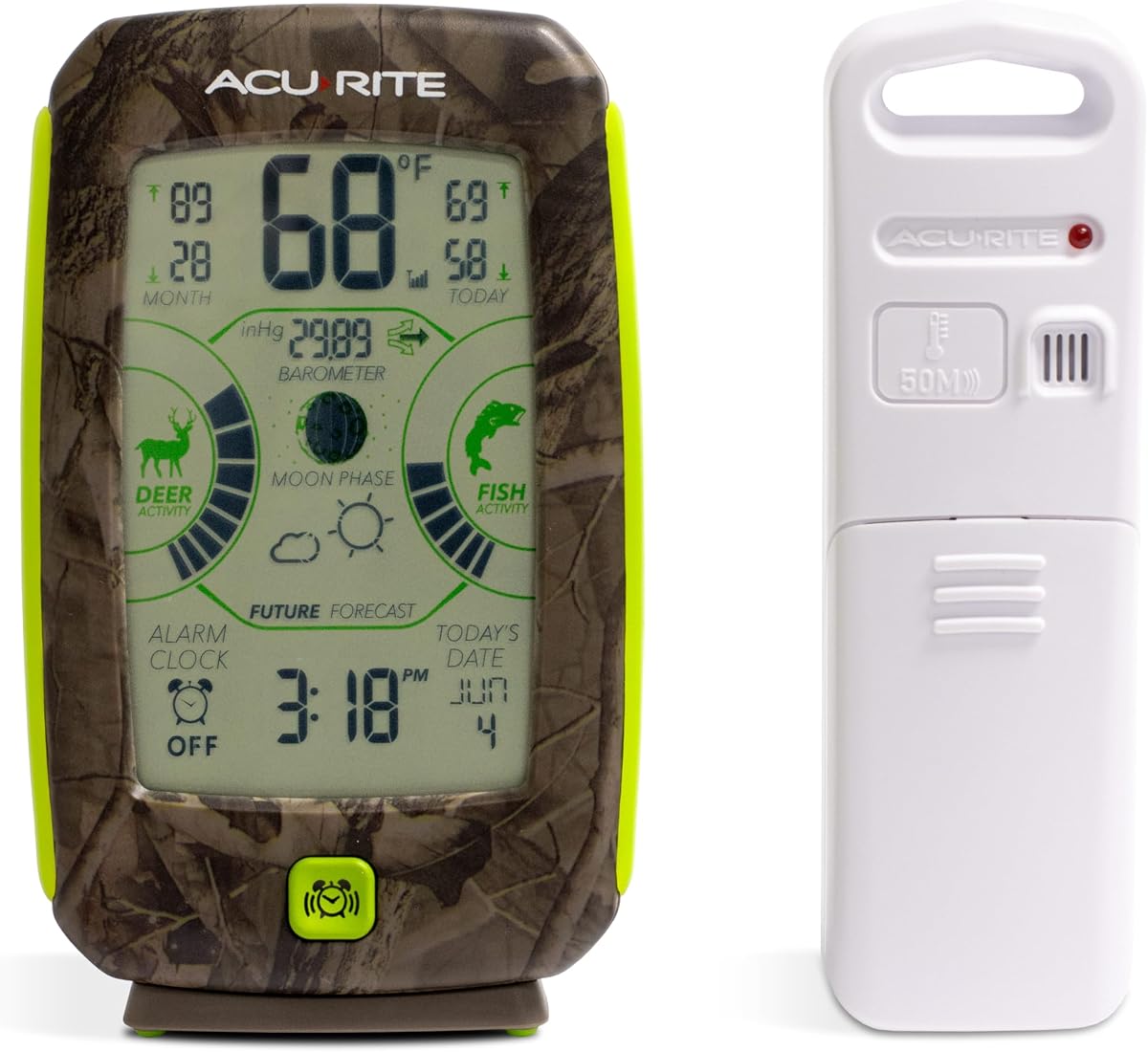
This AcuRite model is tailored for sportsmen who need weather data specific to hunting and fishing. It includes moon phase tracking and high-low temperature records to help predict wildlife activity.
We may earn a commission when you buy through this link, at no additional cost to you.
The self-calibrating forecasting feature uses local pressure data to generate a hyperlocal forecast. The automatic clock updates for daylight saving time ensuring your records remain accurate throughout the year.
While it functions more as a home station than a handheld meter, its compact form allows for easy placement outdoors. It focuses on trends and forecasts rather than instant wind measurements.
We recommend this device for anglers and hunters who rely on consistent environmental patterns. It offers a specialized set of tools designed to improve success during outdoor trips.
Moon phase and pressure data help predict when animals might be most active improving planning for outdoor trips.
The clock sets itself automatically removing the need for manual adjustments when daylight saving time changes occur.
We may earn a commission when you buy through this link, at no additional cost to you.
This AcuRite model features a full color digital display that makes reading weather data simple and visually appealing. It is designed for fixed locations where you need to see trends at a glance.
We may earn a commission when you buy through this link, at no additional cost to you.
The wireless sensor allows you to place it outdoors while keeping the display inside. High and low records help you track conditions over time without needing external tools or logs.
While it requires an outlet for power, the battery backup ensures you do not lose data during short outages. It provides a comprehensive view of your local environment including wind, temperature, and humidity.
We recommend this device for homeowners who want a visible weather dashboard. It offers clear and reliable data for planning daily activities or keeping track of local climate shifts.
The color display ensures that even complex data is easy to read quickly without straining your eyes.
The wireless sensor provides accurate outdoor readings without requiring you to go outside to check the unit.
We may earn a commission when you buy through this link, at no additional cost to you.
Choosing the right Pocket Weather Meter requires evaluating specific features based on your needs and environment. This guide breaks down the most critical factors to help you find the perfect tool.
The accuracy of your weather data depends heavily on the quality of the sensors inside the device. Look for meters that specify accuracy percentages in their technical documentation to ensure they meet your precision requirements.
Prioritize models with proven sensor technology that has been tested in various environments for consistent results.
For a meter to be truly pocketable, it must be compact and lightweight enough to carry comfortably. Consider the shape and weight distribution to ensure it does not hinder your movement during activities.
Choose a device with a rugged exterior that can withstand drops and rough handling without compromising its function.
Different users need different data points such as wind speed humidity temperature or barometric pressure. Identify which metrics are essential for your specific use case before making a purchase.
Ensure the device supports the units of measurement you prefer such as knots miles per hour or kilometers per hour.
Extended battery life is crucial for devices used in remote locations where recharging may not be possible. Check if the device uses standard disposable batteries or a rechargeable option.
Models with automatic power-off features help conserve energy and extend the time between battery changes or charges.
Your device should be able to withstand the environmental conditions it will face during use. Look for water resistance or waterproof ratings if you plan to use it near water or in rain.
Shock resistance ensures that the device can survive accidental drops during transport or operation in the field.
If you need to track weather trends over time, data logging capabilities are essential. Some devices store readings internally while others may connect to apps for analysis.
Consider whether you need to export data manually or if wireless connectivity simplifies your workflow.
A user-friendly interface allows you to access data quickly without spending too much time on settings. Look for clear displays and intuitive button layouts.
Additional features like backlights or glove-friendly controls improve usability in low-light conditions or cold weather.
Your budget will dictate the range of options available to you. Higher-end models often offer advanced features but may not be necessary for basic tasks.
Check the manufacturer's warranty policy to ensure you have support if the device develops issues during normal use.
Start by reading the user manual to understand the specific button functions and menu structure of your device. Proper initial setup ensures accurate readings from the start.
Keep the sensor blades clean and free from debris to maintain measurement accuracy. Use a soft brush or cloth to remove dust or dirt after each use.
Store the device in a dry place when not in use to protect internal electronics from moisture damage. If your device uses disposable batteries, remove them during long periods of inactivity.
Most devices do not require manual calibration as they come pre-set from the factory. However, some advanced models allow you to adjust pressure settings manually for local conditions. Always refer to the manual for specific calibration instructions.
Yes many Pocket Weather Meters are suitable for indoor air flow measurements such as HVAC checks. Ensure the fan blades are clean and the device is placed away from direct obstructions for best results.
Battery life varies by model but many devices can last several months with regular use. Devices with auto shut-off features tend to have longer battery life compared to those that stay on continuously.
A tripod is not necessary for most handheld tasks but it helps stabilize readings when measuring in unstable conditions. Look for models with a tripod hole if you plan to do extended stationary measurements.
Wind speed measures how fast the air is moving while wind chill calculates how cold it feels due to wind on human skin. Many devices calculate wind chill automatically based on temperature and wind speed data.
Many modern models have water-resistant or waterproof designs but always check the IP rating. Some are splash-resistant while others are fully submersible so verify before using near water.
We have reviewed ten excellent options ranging from budget-friendly devices to professional-grade meters. Each offers unique strengths suited for different outdoor and professional needs.
Consider what metrics are most important for your daily activities before selecting a model. Whether you need basic wind speed or advanced barometric data there is a tool for you.
Always check the current product details and pricing before purchasing to ensure you get the best value. Your ideal Pocket Weather Meter should match your specific requirements and usage patterns.